
We develop hybrid mobile applications that run across iOS, Android, and desktop platforms using frameworks such as Ionic, Capacitor, and Apache Cordova. This approach allows businesses to build mobile apps using HTML, CSS, and JavaScript, reducing the need to create and maintain separate native applications for each platform.
With 7+ years of development experience and 70+ completed projects, our team focuses on building stable, scalable applications that help businesses release products faster and manage development costs. We combine modern cross-platform technologies with structured development processes to deliver mobile applications used by startups, SaaS platforms, and enterprise teams
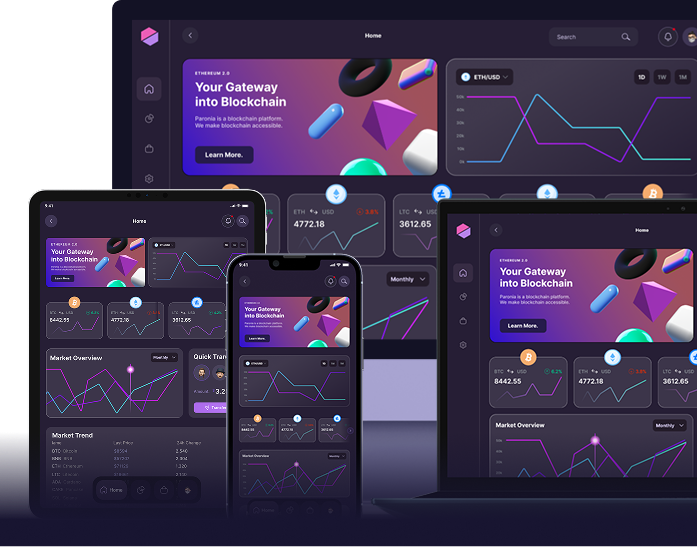


We build fully custom hybrid mobile and desktop applications using Ionic and Capacitor, engineering the complete app from UI component architecture through native device API integration, Firebase backend connectivity, and REST API data layer implementation. Our Ionic builds leverage Angular, React, or Vue as the underlying web framework based on your team’s existing expertise, enabling web developers to ship production-grade iOS, Android, and desktop apps without learning a new language or rebuilding an existing web codebase from scratch.
We design hybrid app interfaces optimized for Ionic’s component system, building adaptive layouts that respect iOS and Android platform conventions using Ionic’s platform-specific UI components, producing high-fidelity Figma prototypes validated with stakeholders before development begins. Every design decision accounts for WebView rendering characteristics and Ionic’s component library, ensuring pixel-accurate implementation across iOS, Android, and desktop without platform-specific UI divergence
We run structured hybrid app QA cycles, covering functional testing across iOS and Android devices, WebView performance profiling, native plugin integration testing for camera, GPS, push notifications, and biometrics, cross-device layout validation, and App Store and Google Play submission compliance checks. Every critical user flow is tested against defined acceptance criteria and no build proceeds to deployment until all priority issues are resolved and client sign-off is confirmed.
We migrate existing Cordova applications to Capacitor, conducting a full plugin compatibility audit, replacing deprecated Cordova plugins with Capacitor equivalents, updating the build configuration, and ensuring complete feature parity throughout the migration. We also handle Ionic version upgrades, resolving breaking changes, modernizing component architecture, and updating native plugin dependencies, keeping your hybrid app current with Ionic’s release cadence without accumulating technical debt.
We design and integrate REST API layers and Firebase backend services into hybrid Ionic applications, implementing secure API authentication with JWT and OAuth 2.0, connecting Firebase Firestore for real-time data synchronization, Firebase Auth for user authentication, and Cloud Functions for serverless backend logic. For applications requiring custom backend systems beyond Firebase, we build Node.js or Python/Django API layers that integrate cleanly with your Ionic frontend via documented REST endpoints.
We provide ongoing support and maintenance for live hybrid applications, covering crash monitoring, performance optimization, Ionic and Capacitor version upgrades, native plugin updates, security patch management, and App Store and Google Play update submissions via CI/CD automation. Post-launch we monitor app health proactively, resolving issues before they impact users at scale and managing ongoing feature development in sprint cycles so your hybrid app keeps evolving with your product roadmap.
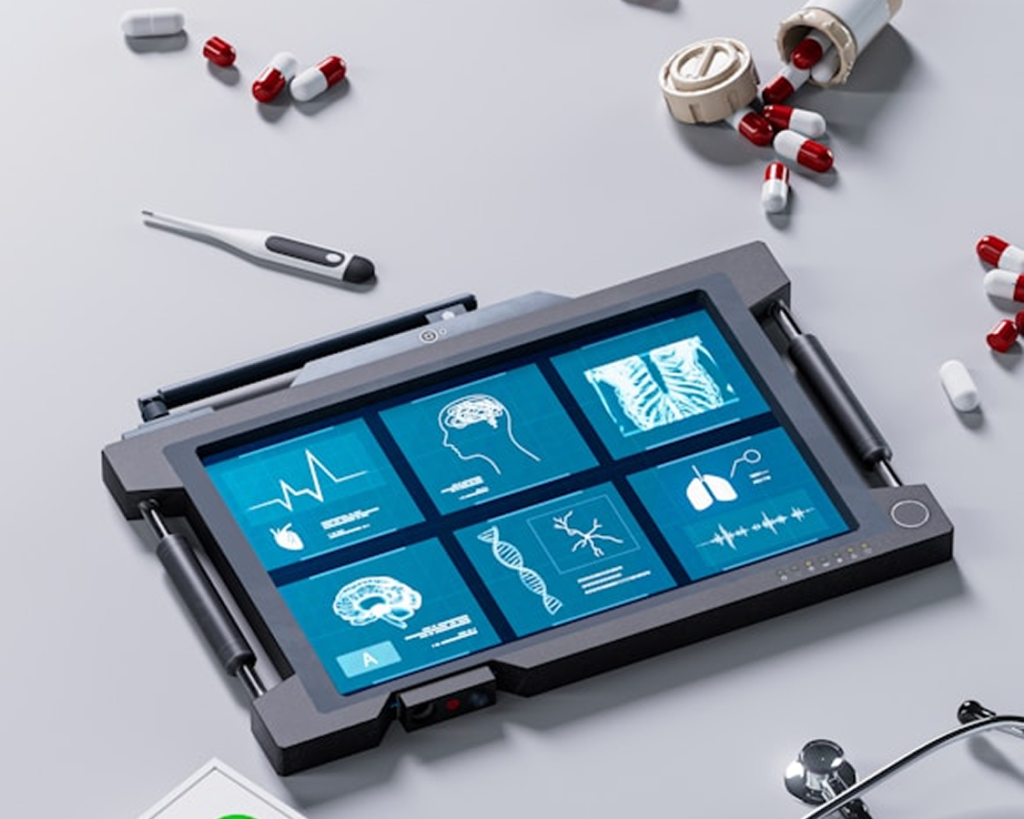
We develop HIPAA-compliant healthcare apps, telemedicine platforms, EHR systems, and digital tools that enhance patient care and clinical workflows.

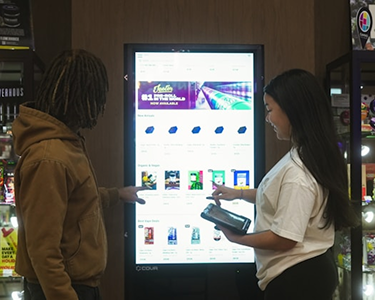





We create streaming apps, content platforms, OTT solutions, and media management tools that enhance digital entertainment and user engagement.


We conduct stakeholder interviews, technical requirement workshops, and existing codebase audits, defining business objectives, target platform scope (iOS, Android, desktop), and native feature requirements. This phase produces a full Ionic project specification covering framework selection (Angular, React, or Vue), Capacitor plugin requirements for native device APIs, Firebase vs REST backend decision, and a phased delivery roadmap with fixed milestones across two-week sprint cycles, so every subsequent decision has a documented technical foundation.
Our designers build Ionic-optimized interfaces in Figma, creating adaptive layouts using Ionic's platform-specific UI components that respect iOS and Android conventions, validated with stakeholders before development begins. Our developers then build the Ionic application in two-week agile sprints, implementing the component architecture, Firebase or REST API data layer, Capacitor native plugin integrations for camera, GPS, push notifications, and biometrics, and WebView performance optimizations that maintain frame rate consistency and scroll responsiveness across every target device.
We run a comprehensive hybrid app QA cycle, covering functional testing across iOS and Android physical devices and simulators, WebView rendering performance profiling, Capacitor native plugin integration testing, cross-device layout validation, push notification delivery testing via Firebase Cloud Messaging, and App Store and Google Play submission compliance checks. Nothing proceeds to deployment until all priority issues are resolved and client sign-off is confirmed across every target platform.
We manage simultaneous App Store and Google Play submission, configuring app signing, build configuration for production environments, store listing metadata preparation, and CI/CD pipeline automation via Fastlane and GitHub Actions. Post-launch we monitor crash reports via Firebase Crashlytics, track performance metrics, manage Ionic and Capacitor version upgrades, and handle ongoing feature development in sprint cycles, making sure your hybrid app stays current, secure, and performant across every platform it targets.











Skip the hiring process, get a senior Ionic and Capacitor engineer embedded in your project within days. From UI component architecture and native plugin integration to Firebase backend and App Store deployment, we own the full hybrid build.
10+ hybrid app developers available now · Ionic, Capacitor & Cordova specialists · iOS, Android & desktop delivery experience

A single Ionic and Capacitor codebase compiles and deploys to iOS, Android, and desktop simultaneously, eliminating platform-specific UI divergence through Ionic's adaptive component system that automatically applies iOS and Android platform conventions from the same shared JavaScript codebase. One build, consistent behavior, every platform your users are on.
Ionic hybrid development eliminates the need for separate iOS and Android engineering teams; your existing web developers build and maintain the entire mobile product using HTML, CSS, TypeScript, and Angular, React, or Vue. For teams with established web codebases, Ionic development reduces total mobile build cost significantly compared to native or Flutter alternatives by removing the language learning curve entirely.
Ionic's web-technology stack and Capacitor's pre-built native plugin library dramatically accelerate development timelines,web developers ship mobile features in the same sprint cycle they build for web, without learning Swift, Kotlin, or Dart, and Capacitor plugins provide ready-made native device API access for camera, GPS, push notifications, and biometrics without writing custom native code. Ship to both App Store and Google Play simultaneously from a single sprint cycle.
With a single Ionic codebase, every bug fix, feature update, and performance improvement deploys to iOS and Android simultaneously, eliminating the version synchronization overhead of maintaining separate native codebases. Web-based updates can be pushed via Capacitor's live update capability without requiring full App Store and Google Play resubmission,reducing the feedback-to-fix cycle from days to hours for eligible web-layer changes.
Capacitor's native plugin library provides production-ready access to every major device API, camera, GPS and geolocation, push notifications via Firebase Cloud Messaging, biometric authentication, accelerometer, file system, and Bluetooth, bridging the gap between WebView-based rendering and native hardware capabilities. For device features without an existing Capacitor plugin, custom native plugins can be written in Swift or Kotlin and integrated directly into the Ionic app.
A single Ionic and Capacitor codebase compiles and deploys to iOS, Android, and desktop simultaneously, eliminating platform-specific UI divergence through Ionic's adaptive component system that automatically applies iOS and Android platform conventions from the same shared JavaScript codebase. One build, consistent behavior, every platform your users are on.
Ionic hybrid development eliminates the need for separate iOS and Android engineering teams; your existing web developers build and maintain the entire mobile product using HTML, CSS, TypeScript, and Angular, React, or Vue. For teams with established web codebases, Ionic development reduces total mobile build cost significantly compared to native or Flutter alternatives by removing the language learning curve entirely.
Ionic's web-technology stack and Capacitor's pre-built native plugin library dramatically accelerate development timelines,web developers ship mobile features in the same sprint cycle they build for web, without learning Swift, Kotlin, or Dart, and Capacitor plugins provide ready-made native device API access for camera, GPS, push notifications, and biometrics without writing custom native code. Ship to both App Store and Google Play simultaneously from a single sprint cycle.
With a single Ionic codebase, every bug fix, feature update, and performance improvement deploys to iOS and Android simultaneously, eliminating the version synchronization overhead of maintaining separate native codebases. Web-based updates can be pushed via Capacitor's live update capability without requiring full App Store and Google Play resubmission,reducing the feedback-to-fix cycle from days to hours for eligible web-layer changes.
Capacitor's native plugin library provides production-ready access to every major device API, camera, GPS and geolocation, push notifications via Firebase Cloud Messaging, biometric authentication, accelerometer, file system, and Bluetooth, bridging the gap between WebView-based rendering and native hardware capabilities. For device features without an existing Capacitor plugin, custom native plugins can be written in Swift or Kotlin and integrated directly into the Ionic app.
Hybrid app development done right requires deep Ionic and Capacitor expertise, production WebView performance experience, and the ability to deliver native device feature access that makes hybrid apps feel genuinely capable on every platform. Here’s what makes our hybrid engineering team the right technical partner for your build.
Our engineers have hands-on experience deploying ChatGPT, GPT-4o, and LangChain-based systems across web, mobile, and enterprise platforms, delivering integrations that perform reliably in production, not just in demos.
Every integration is built around your specific infrastructure, data architecture, and business logic, with custom prompt engineering, tailored API configurations, and AI behavior tuned precisely to your use case.
Our integrations are architected to handle growing request volumes, with token optimization, load management, and modular system design that scales from MVP to enterprise-level deployment without rebuilding.
We provide ongoing post-launch monitoring, prompt optimization, API version management, and performance tuning, ensuring your ChatGPT integration stays accurate and efficient as OpenAI releases model updates.
We've delivered ChatGPT integrations across SaaS platforms, customer support systems, and enterprise workflows, with measurable improvements in response accuracy, operational efficiency, and user engagement.t
Beyond integration, we cover the full AI implementation lifecycle, RAG pipeline design, vector database setup, analytics integration, and long-term AI optimization strategy, all under one team.
Our developers have hands-on production experience across the full Ionic and Capacitor stack, Angular, React, and Vue frontend frameworks, Capacitor native plugin integration for camera, GPS, push notifications, and biometrics, Firebase backend connectivity, and CI/CD deployment to App Store and Google Play.
We help web teams extend existing HTML, CSS, TypeScript, and Angular, React, or Vue codebases into production-grade iOS and Android apps, eliminating the language learning curve, reducing total development cost, and reaching mobile faster than native or Flutter alternatives for teams with established web expertise.
We automate the full deployment pipeline via Fastlane and GitHub Actions, with Capacitor's live update capability pushing web-layer updates directly to users without full store resubmission, reducing your feedback-to-fix cycle from days to hours for eligible web-layer changes.
We build Ionic interfaces using the adaptive component system that automatically applies iOS and Android platform conventions, combined with Capacitor's native plugin library for full device hardware access, delivering a genuinely native-feeling experience from a single JavaScript codebase.
We run two-week sprint cycles with end-of-sprint demos, Jira-tracked progress, and dedicated Slack communication, so you always know exactly what's been built and what's coming next without chasing your agency for updates.
Post-launch we provide Firebase Crashlytics monitoring, Ionic and Capacitor version upgrades, native plugin compatibility updates, and sprint-based feature development, keeping your hybrid app current, secure, and performant across iOS and Android.
Every project below is a production-deployed hybrid application, built with Ionic, Capacitor, and Apache Cordova using Angular, React, or Vue, with Firebase backend integration and native device API access via Capacitor plugins. Results are measured against real hybrid app KPIs including App Store rating, crash-free session rate, WebView rendering performance, user retention, and time-to-market vs separate native builds.
DentaSmart is a mobile app that uses AI and 3D tech to simplify dental care, from early diagnosis to personalized treatment.
DentaSmart is a mobile app that uses AI and 3D tech to simplify dental care, from early diagnosis to personalized treatment.
From web development teams shipping their first Ionic mobile app to product teams migrating legacy Cordova applications to Capacitor, here’s what our clients say about ETechViral’s hybrid engineering quality, Ionic delivery reliability, and the real-world performance of the hybrid apps we’ve built together.
Amir Khan and his team is very responsible and works well. We have worked together and have been able to produce a good quality application. It has been easy to manage the project and they has delivered well. I would recommend others to use his services as they provide 100% perfect services.
Amir Khan and his team is very responsible and works well. We have worked together and have been able to produce a good quality application. It has been easy to manage the project and they has delivered well. I would recommend others to use his services as they provide 100% perfect services.
Amir Khan and his team is very responsible and works well. We have worked together and have been able to produce a good quality application. It has been easy to manage the project and they has delivered well. I would recommend others to use his services as they provide 100% perfect services.
Post-launch we provide active crash monitoring via Firebase Crashlytics, WebView performance tracking, Ionic and Capacitor version upgrade management, native plugin compatibility updates as iOS and Android release new OS versions, security patch deployment, and App Store and Google Play update submissions via CI/CD automation. We also support Capacitor live updates, pushing web-layer improvements directly to users without full store resubmission for eligible changes, and manage ongoing feature development in sprint cycles so your hybrid app keeps improving so your hybrid app keeps shipping new features from the same Ionic codebase your team already owns.
If the scenarios above match your team's situation, the next step is a 30-minute technical conversation with our Ionic engineers.
No vague proposals. No bloated timelines. Just a free 30-minute consultation with our Ionic and Capacitor engineers, and a clear project scope delivered within 48 hours.
10+ hybrid app developers available now · Ionic, Capacitor & Cordova specialists · iOS, Android & desktop delivery experience