
We build custom WebRTC applications using the WebRTC API, MediaStream API, TURN/STUN server architecture, and WebSocket signaling integrated with LiveKit, Twilio, or Agora SDK, where platform requirements suit it, or built fully custom where data privacy, compliance, or performance demands it.
Every implementation is engineered for sub-100ms latency, DTLS-SRTP end-to-end encryption, and cross-browser reliability across Chrome, Firefox, Safari, and Edge in production environments.
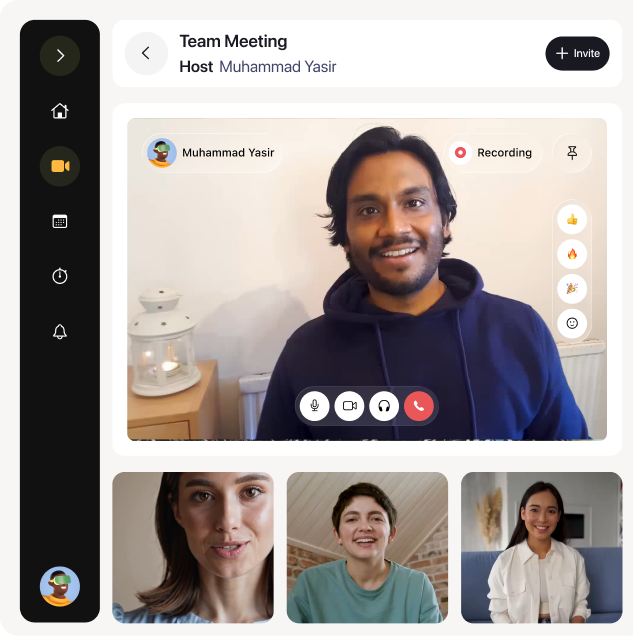

WebRTC (Web Real-Time Communication) is an open-source protocol framework that enables direct peer-to-peer audio, video, and data transmission between browsers and applications, without requiring a proprietary plugin or centralized media server for every connection. The process begins with signaling, where two clients exchange Session Description Protocol (SDP) offers and answers through a WebSocket signaling server to negotiate media capabilities, codecs, and connection parameters. Once signaling completes, the ICE (Interactive Connectivity Establishment) framework uses STUN servers to discover each client’s public IP address and attempts a direct peer-to-peer connection. When direct connectivity is blocked by NAT or firewall restrictions, which happens frequently in enterprise and mobile network environments, TURN servers relay the media stream to maintain connection reliability.
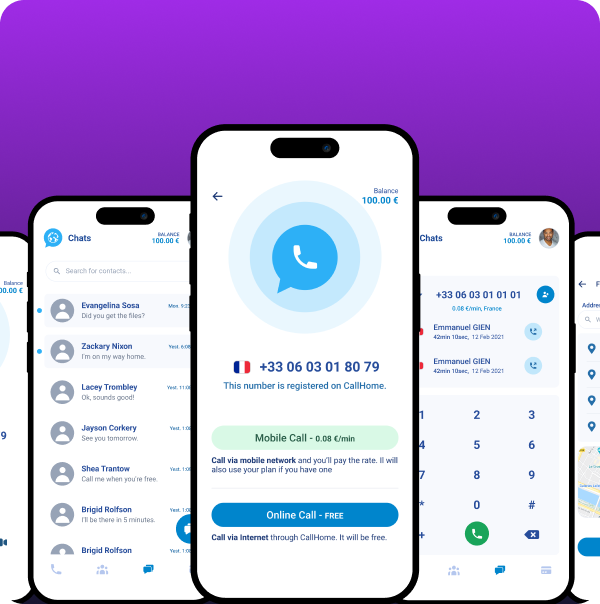
A properly architected WebRTC solution goes far beyond basic video calling, delivering sub-100ms audio/video latency, DTLS-SRTP encrypted media streams, NAT traversal reliability across enterprise and mobile networks, and an SFU-based architecture that scales to thousands of concurrent participants without degrading stream quality.
WebRTC performance depends on decisions made at every layer of the stack, not just the client-side SDK. Below is every technology we use across protocol implementation, media server routing, signaling infrastructure, and frontend delivery, and why each one is in the stack.






Every WebRTC application we build follows a structured five-phase process, designed to eliminate architectural risk early, validate real-time performance before launch, and deploy infrastructure that handles production network conditions reliably from day one.
We conduct detailed technical consultations to map your real-time communication requirements, identifying use case specifics, concurrency expectations, latency targets, platform constraints, and compliance requirements. This phase produces a clear technology selection recommendation, whether native WebRTC API, LiveKit, Twilio, or Agora SDK, and a defined architecture blueprint before any development begins.
Our engineers design the full WebRTC system architecture, defining peer-to-peer vs. SFU-based media routing, signaling server design using WebSockets or Socket.io, STUN/TURN server topology, codec selection (VP8, VP9, H.264, Opus), ICE configuration, and security protocol implementation including DTLS-SRTP encryption. Every architectural decision is documented and justified against your specific latency, scalability, and security requirements.
We build the full WebRTC application in structured agile sprints, implementing audio/video streaming, DataChannel messaging, screen sharing, recording pipelines, and SDK integrations using the WebRTC API alongside LiveKit, Mediasoup, or Janus for media server functionality. All APIs and SDKs are configured for clean interoperability with your existing platform infrastructure and optimized for minimal connection establishment latency.
Every WebRTC component undergoes a rigorous testing cycle, covering connection establishment success rates, ICE candidate resolution, TURN server failover behavior, codec performance under bandwidth constraints, packet loss resilience, DTLS-SRTP encryption validation, and cross-browser compatibility across Chrome, Firefox, Safari, and Edge. We simulate adverse network conditions, including high packet loss and low bandwidth, to validate real-world reliability before any deployment is approved.
We manage the full production deployment, configuring signaling servers, TURN/STUN infrastructure on AWS, SSL/TLS certificates, auto-scaling groups, and CI/CD pipelines for continuous deployment. Post-launch, we provide active monitoring via AWS CloudWatch, TURN server performance tracking, connection quality analytics, and rapid incident response so your real-time communication platform maintains the uptime and call quality your users depend on.
We conduct detailed technical consultations to map your real-time communication requirements, identifying use case specifics, concurrency expectations, latency targets, platform constraints, and compliance requirements. This phase produces a clear technology selection recommendation, whether native WebRTC API, LiveKit, Twilio, or Agora SDK, and a defined architecture blueprint before any development begins.
Our engineers design the full WebRTC system architecture, defining peer-to-peer vs. SFU-based media routing, signaling server design using WebSockets or Socket.io, STUN/TURN server topology, codec selection (VP8, VP9, H.264, Opus), ICE configuration, and security protocol implementation including DTLS-SRTP encryption. Every architectural decision is documented and justified against your specific latency, scalability, and security requirements.
We build the full WebRTC application in structured agile sprints, implementing audio/video streaming, DataChannel messaging, screen sharing, recording pipelines, and SDK integrations using the WebRTC API alongside LiveKit, Mediasoup, or Janus for media server functionality. All APIs and SDKs are configured for clean interoperability with your existing platform infrastructure and optimized for minimal connection establishment latency.
Every WebRTC component undergoes a rigorous testing cycle, covering connection establishment success rates, ICE candidate resolution, TURN server failover behavior, codec performance under bandwidth constraints, packet loss resilience, DTLS-SRTP encryption validation, and cross-browser compatibility across Chrome, Firefox, Safari, and Edge. We simulate adverse network conditions, including high packet loss and low bandwidth, to validate real-world reliability before any deployment is approved.
We manage the full production deployment, configuring signaling servers, TURN/STUN infrastructure on AWS, SSL/TLS certificates, auto-scaling groups, and CI/CD pipelines for continuous deployment. Post-launch, we provide active monitoring via AWS CloudWatch, TURN server performance tracking, connection quality analytics, and rapid incident response so your real-time communication platform maintains the uptime and call quality your users depend on.
Connect your business with a highly expert, skilled WebRTC developer who delivers secure, real-time communication solutions for seamless collaboration.
Hire a highly expert, skilled WebRTC developer to build secure, scalable real-time communication apps tailored for diverse industries. We leverage peer-to-peer connections, STUN/TURN, signaling, APIs, and streaming to ensure seamless collaboration.
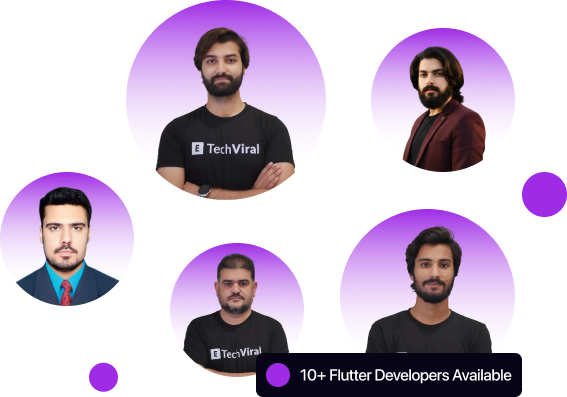
WebRTC development requires deep protocol knowledge, production infrastructure experience, and the ability to engineer reliably across unpredictable real-world network conditions. Here’s what makes our WebRTC engineering team the right technical partner for your build.
Our developers have hands-on experience across the full WebRTC protocol stack, SDP negotiation, ICE framework configuration, TURN/STUN server deployment, MediaStream handling, and SFU media routing via Janus and Mediasoup. We build real-time communication systems that perform reliably in production, not just in controlled demo environments.
We optimize every layer of the WebRTC stack for sub-100ms latency, configuring TURN/STUN infrastructure for fast ICE candidate resolution, tuning codec parameters for network-adaptive audio and video quality, and engineering WebSocket signaling architecture that holds session stability under high-concurrency loads and variable network conditions.
We engineer WebRTC solutions that perform consistently across Chrome, Firefox, Safari, and Edge on desktop, and across iOS and Android on mobile, handling browser-specific WebRTC implementation differences, codec support variances, and platform-specific MediaStream constraints that cause cross-platform failures in poorly engineered implementations.
We build fully custom WebRTC infrastructure, or integrate LiveKit, Twilio, and Agora SDK where platform requirements suit it, giving you complete control over your real-time communication stack, your data, and your infrastructure costs. No vendor dependency, no feature limitations, and no platform pricing that scales against you as your user base grows.
Our developers have hands-on experience across the full WebRTC protocol stack, SDP negotiation, ICE framework configuration, TURN/STUN server deployment, MediaStream handling, and SFU media routing via Janus and Mediasoup. We build real-time communication systems that perform reliably in production, not just in controlled demo environments.
We optimize every layer of the WebRTC stack for sub-100ms latency, configuring TURN/STUN infrastructure for fast ICE candidate resolution, tuning codec parameters for network-adaptive audio and video quality, and engineering WebSocket signaling architecture that holds session stability under high-concurrency loads and variable network conditions.
We engineer WebRTC solutions that perform consistently across Chrome, Firefox, Safari, and Edge on desktop, and across iOS and Android on mobile, handling browser-specific WebRTC implementation differences, codec support variances, and platform-specific MediaStream constraints that cause cross-platform failures in poorly engineered implementations.
We build fully custom WebRTC infrastructure, or integrate LiveKit, Twilio, and Agora SDK where platform requirements suit it, giving you complete control over your real-time communication stack, your data, and your infrastructure costs. No vendor dependency, no feature limitations, and no platform pricing that scales against you as your user base grows.
These industries share a common requirement: real-time audio, video, or data transmission that is low-latency, encrypted, and reliable at scale. WebRTC is the protocol that meets that requirement from HIPAA-compliant telehealth consultations and live fitness coaching sessions to interactive EdTech classrooms, social platforms, e-commerce support tools, and banking communication channels.
We build scalable SaaS products with secure architecture, subscription models, automation, and multi-tenant capabilities tailored to business needs.

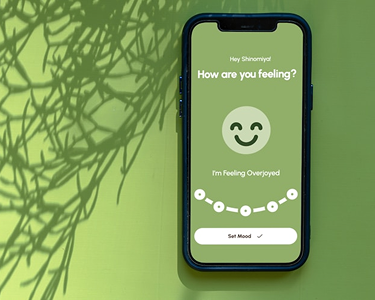
We develop HIPAA-compliant healthcare apps, telemedicine platforms, EHR systems, and digital tools that enhance patient care and clinical workflows.


We build custom eLearning platforms, LMS systems, virtual classrooms, and student engagement apps tailored for modern digital education needs.
We deliver ecommerce websites, mobile shopping apps, POS systems, and retail automation tools designed to improve conversions and customer experience.

We create social networking apps, community platforms, chat features, and content-sharing systems built for engagement, scalability, and modern UX.

We develop HIPAA-compliant healthcare apps, telemedicine platforms, EHR systems, and digital tools that enhance patient care and clinical workflows.

Every project below is a production-deployed WebRTC application, engineered on the WebRTC API, WebSocket signaling, and TURN/STUN infrastructure, and measured against real performance metrics including connection success rate, session latency, concurrent user capacity, and stream quality under real-world network conditions.
From telehealth providers deploying HIPAA-compliant video consultation rooms to live streaming platforms scaling to thousands of concurrent viewers, here’s what clients say about the engineering quality, delivery process, and platform performance after working with ETechViral.
Amir Khan and his team is very responsible and works well. We have worked together and have been able to produce a good quality application. It has been easy to manage the project and they has delivered well. I would recommend others to use his services as they provide 100% perfect services.
Amir Khan and his team is very responsible and works well. We have worked together and have been able to produce a good quality application. It has been easy to manage the project and they has delivered well. I would recommend others to use his services as they provide 100% perfect services.
Amir Khan and his team is very responsible and works well. We have worked together and have been able to produce a good quality application. It has been easy to manage the project and they has delivered well. I would recommend others to use his services as they provide 100% perfect services.
Everything you need to know about how we architect, build, and deploy custom WebRTC applications, answered directly by our engineering team.
WebRTC (Web Real-Time Communication) is an open-source protocol framework that enables direct peer-to-peer audio, video, and data transmission between browsers and applications without requiring a proprietary plugin or centralized media server for every connection. The process begins with signaling, where two clients exchange Session Description Protocol (SDP) offers through a WebSocket signaling server to negotiate codecs and connection parameters. The ICE framework then uses STUN servers to discover public IP addresses and attempts a direct peer-to-peer connection. When direct connectivity is blocked by NAT or firewall restrictions, TURN servers relay the media stream to maintain reliability. For multi-participant applications, SFU-based media servers like Janus or Mediasoup route streams efficiently between participants without requiring every client to send individual streams to every other participant.
No vague proposals. No generic timelines. Just a free 30-minute consultation with our WebRTC engineers and a clear technical scope delivered within 48 hours.
WebRTC specialists available now · Custom builds & SDK integrations · Video conferencing, telehealth & live streaming platforms shipped to production